


Think Differently When Designing Your Intranet
An intranet should never be a copy of a company’s public website. Both can have shared branding elements like colors, fonts and visual identity, but their purpose is different. A public website is for the outside world, an intranet helps employees get information, use internal tools and perform daily tasks.
A good intranet will use familiar company branding combined with a structure built around the needs of its employees.
What Is the Difference Between an Intranet and a Public Website?
On the outside, a public website talks through brand stories, services, products, images, and calls to action. It can use big images, big headlines and other visuals to catch visitors’ attention.
The intranet has a more practical purpose. Employees can use it to find company policies, search for documents, access applications, read company news, manage notifications, or find common resources.
The primary difference in thinking about what is a public facing website is who the audience is and what the communication goals are. Conversely, intranets are used for internal communication, accessing information, and completing employee tasks.
Intranet Design vs Public Website Design
The difference is more clear when considering the design priorities of each platform.
| Intranet | Public Website |
|---|---|
| For the staff | Targeted for external audiences |
| Focuses on access to information | Focuses on communication and brand storytelling |
| Often includes dashboards & custom tools | Often uses prominent visual content |
| Search can be a major navigation method | Navigation usually supports browsing |
| Easy access to commonly used resources | Calls to action are strongly visually emphasized |
| The content is structured for easy navigation | The content can be more visually storytelling |
Knowledge of intranet design vs. public website design helps organizations avoid applying external website conventions to an internal platform while ignoring employee needs.
Example 1: 3M Company Intranet
The 3M intranet is an example of how a company can maintain brand consistency while offering an alternative internal interface.
Intranet
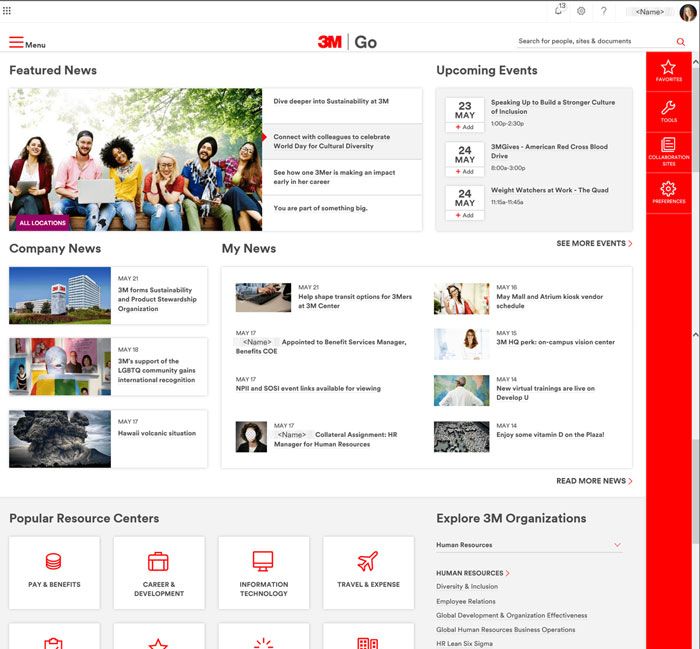
The intranet uses 3M’s red color and familiar typography, linking it visually to the public brand. But its dashboard structure provides a fairly consistent hierarchy of information.
Employees can pin their favorite tools, go to the tools they use the most and set preferences. These functions provide easy access to common resources.
Public Website
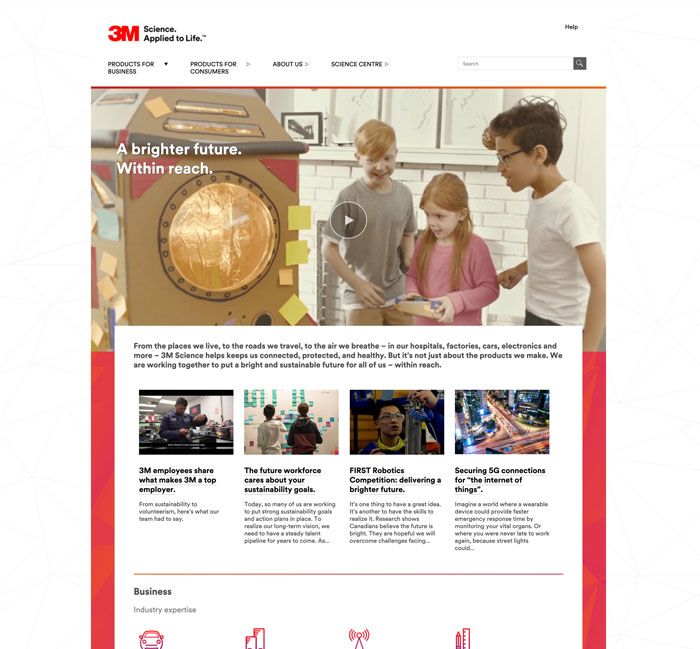
The emphasis on storytelling is greater on the public-facing website. Visitors are introduced to the brand by a large hero image and prominent visual elements.
More visual breathing room in content and more use of scrolling. So, while the branding of the two platforms is recognizable, their structures are different for different audiences.
Example 2: Jetblue Airways Intranet
JetBlue’s intranet is another example of an internal platform for employee tasks.
Intranet
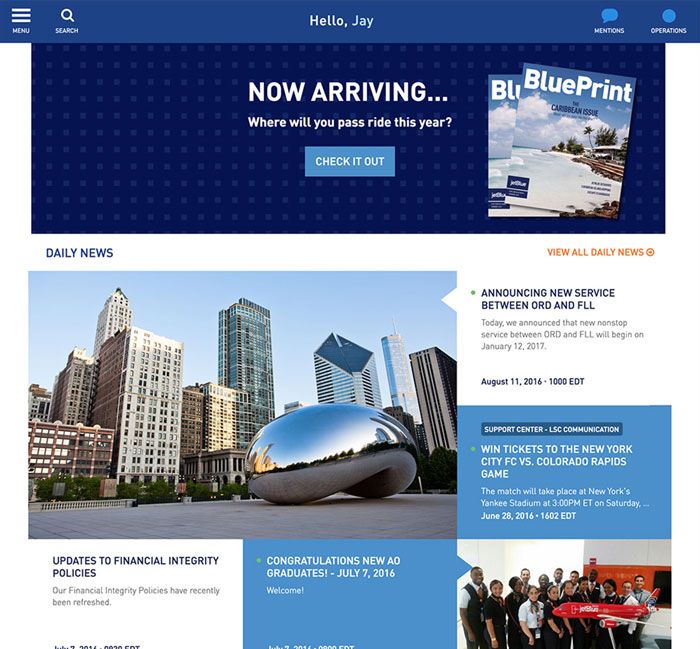
The employee-centric interface puts the employee name front and center and search gets a lot of real estate. Employees can search for information instead of clicking through multiple menu levels.
Mentions and notifications keep staff up to date, and frequently used resources can be pinned for quicker access.
Public Website
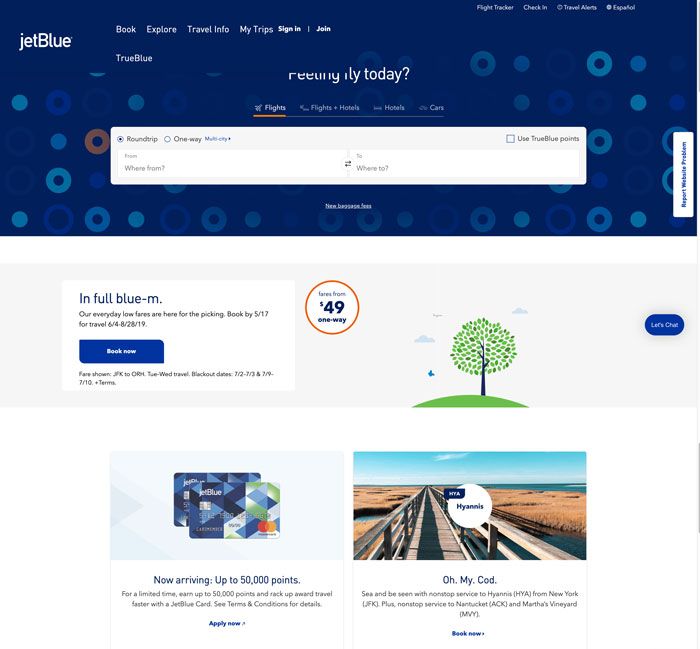
The public website has different functionality and visual priorities. Navigation options are more visible, visitors can see available sections without a hidden menu.
The branding is also bolder and more playful, helping with consumer communication. The public site is about the brand; the intranet is about employees logging in and getting things done.
Intranet Design Best Practices
Don’t begin with the appearance of the intranet. Begin with the purpose it serves. Think about what employees need to do and what information they use most frequently.
1. Design Around Employee Goals
Identify the main employee responsibilities. Specify paths to search, document access, company news, internal tools, notifications and frequently used resources.
2. Maintain Brand Consistency
The intranet doesn’t have to look like a whole new site from the public website. The platforms can be connected by using the same colors, typefaces, logos and other brand features.
But branding should support the interface, not dictate its entire structure.
3. Prioritize Clear Navigation
Employees should be able to quickly find important information without having to click through unnecessary pages. Search, shortcuts, favorites, logical navigation can enable users to quickly get to the resources they need often.
4. Keep the Interface Simple
Simple design, nothing that distracts from the important information. A successful intranet design focuses on content and functionality, so employees are able to use the interface without added complexity.
Why Intranet Design Should Not Copy a Public Website
Public websites and intranets may belong to the same organization but they have different audiences and objectives. If you copy the public website, you might have additional steps to take or a structure that doesn’t fit the way your employees work.
The better way is to build an interface, based on internal needs, but applying relevant branding elements from the public site.
What are the differences in intranet design and public website design in terms of audience, purpose, and functionality? Public websites engage external visitors and facilitate the brand storytelling. Intranets help employees by providing them with access to information, tools and internal communications.
“The goal is to preserve the identity of the company, but create a structure that works for employees specifically.”
References
Branding an Intranet: https://www.nngroup.com/articles/branding-intranet/
Best Transportation Sector Intranets 2003 -2018
By Kara Pernice, Amy Schade, Jakob Nielsen, Patty Caya, Mathew Schwartz, and Candice Goodwin
PBL – Sharepoint Intranet Portal
By Umair Khalil
3M Go engages employees and wins two Intranet Awards