


Trust Your Professional
One of the most common questions we get from potential clients when interviewing us is what makes a successful project relationship. The answer has evolved over the years to “trust your professional”. Whether its your IT person, chef, designer or project manager. We in turn learn to trust our client’s after all they are the product experts and we are just students.

Part of the role we are tasked with is to better understand our clients business in order to be able to provide the best solution possible based on the best knowledge possible. No one knows your business better than you do so we rely and trust you for this understanding. We learn what we need by first doing research and secondly asking you applicable questions, in the form of a strategy session, to help us flush out what we need be prepared for the project strategy. So ultimately education is the cornerstone of trust.
What makes our work so rewarding is the constant opportunity to educate and learn from client to client and project to project. We naturally spend time educating every new client at the beginning and throughout the process. This makes for a better solution in the end as the better equipped the client is the closer we can all work towards the best possible solution.
What happens when trust is low
Clients that ask questions are great. It means the client is engaged, curious and is aspiring to get the best out of the process. However, questioning everything can be time consuming, taking valuable time away from actual production. Understanding that 100’s of micro decisions go into every design by our professionals and having to justify each of those micro decisions is often unnecessary, and in extremes, painful. Time on a project is not infinite so when time is consumed rationalizing these micro decisions there tends to be frustration from all team members in the effort to produce the conceived vision
When trust is high
Working with a new agency can be difficult and can be painful for clients if our team doesn’t clearly understand your goals. So here at Inorbital we engage discovery sessions to fully capture the business objectives and high-level requirements of the project. We do this by learning about your organization, audience, sales channel, customers, staff, history, goals, services and products and so on. By gaining this understanding we are able to fine tune the solution to your particular needs and wants.
There are 4 important elements that make up trust:
Over the years we have found that trust in a successful client-partner relationship comes down to four things: being able, believable, connected and dependable. None of these on their own is enough. Together, they create the confidence needed for both sides to make decisions, solve problems and move a project forward.
Able - demonstrated competency
Clients first need confidence that their partner knows what they are doing.
That confidence is built through experience, references, client testimonials, case studies, certifications, awards and a proven portfolio of successful work. For Inorbital, having delivered more than 200 projects gives us the benefit of having seen many of the challenges that can arise during complex CMS implementations.
But competency is about more than credentials. It is demonstrated by asking the right questions, identifying risks before they become problems, understanding the technology and being able to recommend a practical way forward when something unexpected happens.
Ultimately the client needs to be able to say, “I trust that these people can get us where we need to go.”
Believable - acting with integrity
Being capable is only part of the equation. Clients also need to believe what you tell them.
That credibility is earned over time through strong customer relationships, references and consistent delivery, but it starts much earlier in the relationship, often during the sales process.
One of the best pieces of feedback I received after a pitch many years ago was that I came across as earnest. At the time I remember thinking, of course I was earnest. Why wouldn't I be?
But being earnest is not always as obvious as you might think, particularly during a competitive sales process. It can be tempting to overpromise, minimize complexity or simply tell a prospective client what you think they want to hear.
We have learned that trust is built much faster by being straightforward. Sometimes the right answer is, “We don't know yet,” “That timeline is aggressive,” or even, “We don't think you need that.”
Those answers may not always make the easiest sales pitch, but they tend to create much stronger long-term relationships.
Connected - demonstrating that you care
Clients hire a professional partner for more than the ability to execute a list of requirements.
They are also hiring experience, ideas, strategy and best practices.
Being connected means taking the time to understand the client's organization, its users, its goals and the pressures its internal team is facing. It means having their interests in mind when making recommendations rather than simply completing the task in front of you.
Sometimes that requires challenging the original request.
A client may tell us they need a particular feature. Our role is not necessarily to immediately build it. We first need to understand the problem they are trying to solve and determine whether that feature is actually the best solution.
A good partner brings forward ideas without always being asked, identifies potential risks, and thinks about how decisions made today will affect the client well after the website launches.
That is when the relationship begins to move from vendor and client to true partnership.
Dependable - do what you say you will do
Dependability sounds simple, but it may be the most important element of trust.
Do what you said you would do.
If you commit to something, follow through. If a milestone is at risk, communicate it early. If you promise to investigate an issue, come back with an answer. And when something goes wrong, acknowledge it and work with the client to resolve it.
No complex digital project goes exactly according to plan. Requirements evolve, technical issues emerge and priorities change.
Being dependable does not mean that nothing ever goes wrong. It means the client should never be surprised by something you already knew.
Trust is built through hundreds of relatively small interactions over the course of a project. Consistently following through on those commitments creates confidence that when a larger challenge eventually appears, both sides can deal with it together.
Trust works both ways
These four elements are just as important from the other side of the relationship.
As a partner, we also need to trust that our clients will provide the business knowledge we need, make decisions, involve the right stakeholders, deliver content and feedback, and raise concerns openly when something is not working.
The client knows their organization better than we ever will. We know how to plan, design and build digital experiences. The best projects happen when both sides respect that expertise and trust each other enough to use it.
That does not mean eliminating process, governance or accountability. It means creating a relationship where those things support the project rather than becoming barriers to it.
After more than 200 projects and many long-term client relationships, we continue to see the same pattern: the higher the level of trust between the client and the project team, the better the decisions, the smoother the project and, ultimately, the better the result. All of the above are genuinely traits we value and promote because we know how great the project will turn out when the relationship is based on trust. Inorbital has always worked hard to be transparent knowing how big an impact it will have on the project’s success.
The most successful and rewarding projects are when trust between the client and designer is highest. This goes with any relationship.
Visit our work page for a big list of projects and success stories.
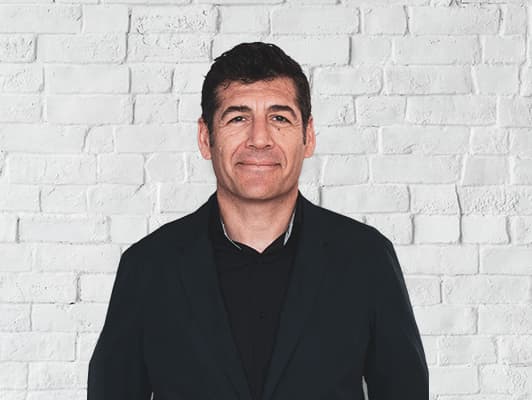
Tony
Director and Founder
Inorbital founder and digital solution architect with over 20 years’ experience planning and directing dynamic web presence and web applications for all types of organizations. When not directing Inorbital you can find him actively trying something completely new. You can schedule a meeting with me here